

On Forgiveness
and reclaiming its power today
It’s a hard truth that if you live long enough, someone is going to let you down.It’s a harder truth that if you live long enough, someone is going to let you down deeply in a way that impacts your life. Their words and actions damage you, wound you, scar you. Maybe for years. How on earth do you come to terms with that and how do you get past it?
Dare we even talk about forgiveness?
Forgiveness is hard isn’t it? Even when the other person involved is sorry, it’s costly. And when the person isn’t aware, or simply doesn’t care about the impact they’ve left on your life, forgiveness might feel unnecessary, impossible or both.
I don’t want to be defined by bitterness, burdened by storied wounds that fester. But I’m not interested in trite sentiments of faux-giveness either: the platitudes that minimize our pain, or the repression that hides and dismisses it. I want, I need, something real and transformative.
Forgiveness is central to the Christian faith. So what role does forgiveness play in our lives, our relationships and leadership today, and how do we get there?
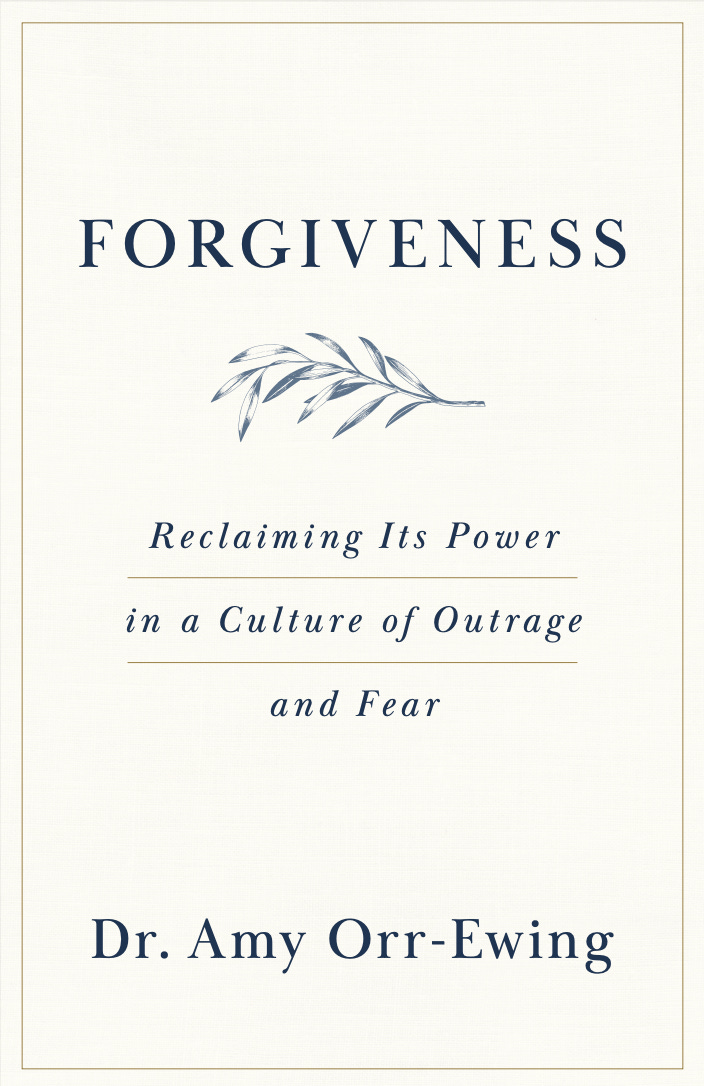
Today’ newsletter is an excerpt of a book written by a friend I’ve known for over 30 years - Dr. Amy Orr Ewing. Amy’s latest book Forgiveness: Reclaiming Its Power in a Culture of Outrage and Fear takes a deep dive into this tender subject.I’m sharing this not just because I love and respect my friend; though of course I do, she’s awesome. I’m sharing this excerpt because I’ve seen Amy live what she writes; we’ve talked and prayed each other through some of this stuff . I’ve seen the costly steps she’s made and the freedom she lives as a result.
Forgiveness is hard isn’t it?
If you’re interested in stepping away from faux-giveness into the realities of forgiveness, read on.
Much love to you leaders,

Read Excerpt Below
While my grandparents lived through the Second World War, raising children during that horror and its aftermath, I have lived my life in relative peace, with educational and economic opportunities that previous generations worked hard for me to have. The blessings of liberty, a loving family, and a hopeful future are the canvas my life has been painted on.
But like you, I’m sure, I have also had to come to terms with really awful things: trauma, betrayal, loss. And that’s just me. My husband is a survivor of horrendous abuse as a child. I know people whose loved ones were murdered. In light of such things, living out the teachings of Jesus to “love our enemies” and “forgive as Christ forgave us” isn’t easy—especially when we have seen the concept of forgiveness used to sweep aside abuse and enable unjust systems and power dynamics to continue.
In our individual lives, our national life, and this cultural moment, many of us are particularly aware of loss, harm, injustice, and the trauma and damage they cause. We are a generation rightly crying out for justice. Justice movements recognize the harm inflicted on a human being when wrong is done. When we really think about the pain of such harm, the word “forgiveness” can make us recoil. Forgiveness can sound a lot like minimizing harm.
We live in a world of outrage and fear. The dial has been turned up on animosity, acrimony, and division in our public discourse and family conversations. A lack of grace festers. We are conscious of the impact that trauma and anxiety have on our bodies and souls. Many of us are looking to therapists, self-care practices, and healthcare to give us the sanctuary, har- mony, and safety we want for ourselves and our communities.
With this context as a backdrop, I want to explore the possibility that forgiveness can be a gift to any culture and of particular resonance in this moment.
I believe there is something beautiful, radical, and different in the Christian story. The Christian story acknowledges that wrongdoing is real and that there is real justice to be done. It challenges us to admit that all of us are flawed and need forgive- ness. And it offers us a healthy way of forgiving those who have harmed us, freeing us from the burden of getting the vengeance that justice demands and from the toxic consequences of bitterness. This story offers us practical wisdom for resolving the division, conflict, and anxiety that haunt us. In this book, we will start to see why forgiveness—whether we receive it or find ourselves empowered to offer it to others—is the greatest gift the Christian faith can offer our age. Forgiveness is central to the historical Christian faith and yet is poorly understood and rarely practiced today.
I began thinking more deeply about forgiveness at a point in my professional life when I had begun to advocate for survivors of sexual abuse in connection with the justice system and in the organizations where the harm occurred. Alongside this advocacy work, I began to write articles and think about the inter- play between forgiveness and justice. It struck me that various forms of cancel culture were a way for young people to express understandable horror at harm and transgression but that these attempts to engage with justice had introduced a harsh and punitive tone into Western public debate. I was invited to speak to the Westminster Parliament at the 2023 Parliamentary Prayer Breakfast. There, I spoke on forgiveness as the greatest gift the Christian faith could offer our age. A few months later, I was invited to speak at the Alliance for Responsible Citizenship to make the case for the Christian faith on a similar basis. These two opportunities to publicly engage with the ancient idea of forgiveness set me on the path of writing this book.
Over the past two years, when friends or acquaintances asked me, “What are you writing about?” and I told them about this book, I received two different responses. Some responded with an immediate personal, practical riposte. “Oh no, I suppose I ought to read that. I have a long list of people I should forgive.” Others gravitated toward the potential magnitude of forgiveness that is serious about justice on a big-picture level, at a communal, national, and cultural level. Both responses are important. If forgiveness is real, it will mean something on multiple levels.
The British folk band Mumford and Sons sings, “Now let me at the truth that will refresh my broken mind.”1 As we embark on this journey of recapturing a personal, communal, and national vision of the goodness and power of forgiveness, perhaps hope will rise at the possibility of healing for our outraged and fearful culture. Read full excerpt here.
Buy Amy’s Book here.
Check out Amy’s Instagram | Website



The views expressed in this newsletter are solely those of the author, Jo Saxton, unless otherwise stated.